

Alone and not alone: Implications for clinicians working with male survivors of childhood sexual abuse
Adult male survivors of childhood sexual abuse face unique barriers to disclosure. This study explores their lived experiences to help clinicians create safer therapeutic environments.
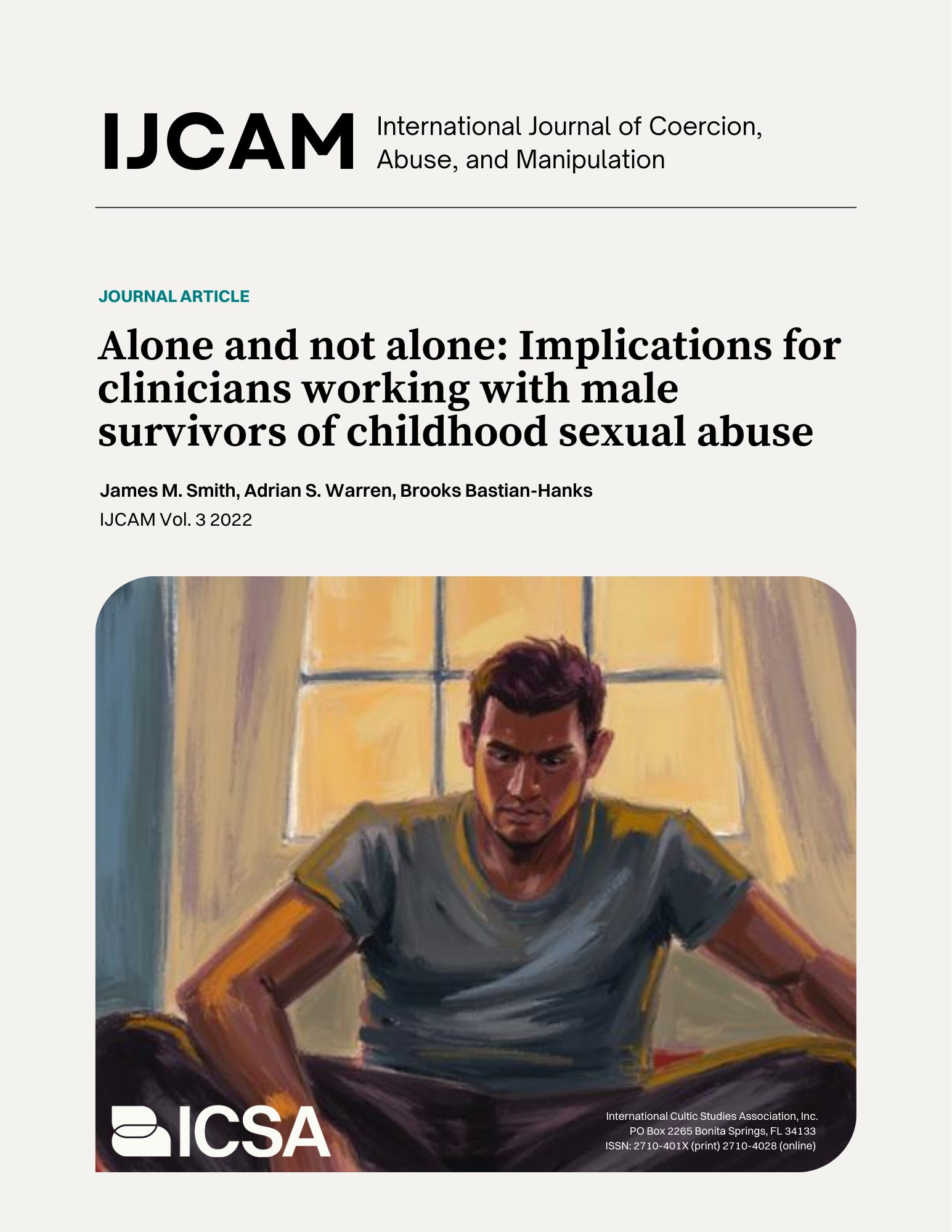
This is a summary version of an academic article written by James M. Smith, Adrian S. Warren, and Brooks Bastian-Hanks, first published in the IJCAM Vol. 3 2022. Read the full academic article on IJCAM, and the summary below.
At a glance
The article uses interpretive phenomenological analysis (IPA) to study the experiences of adult, cisgender men who disclosed childhood sexual abuse (CSA) in adulthood. The researchers identify themes such as the paradox of being “alone and not alone,” the fear of “throwing grenades” into the lives of others, and the struggle against “monsters in the deep”. The study aims to equip mental health professionals to better support male survivors by respecting their autonomy and understanding the relational nature of disclosure.
Who this article is for: This article is essential for mental health professionals seeking to improve their trauma-informed care for adult, cisgender male survivors of childhood sexual abuse (CSA). It is also highly relevant for advocates and survivors interested in understanding the specific relational and psychological barriers to disclosure in adulthood.
Key points
The challenge of defining abuse
The lack of a consistent operational definition for childhood sexual abuse (CSA) complicates both academic research and clinical treatment. Legal definitions and age limits vary by state, and many experiences—such as sexual contact between an adult female and a minor male—are often underreported or not conceptualized as abuse due to gender bias. This inconsistency makes it difficult for survivors to identify their own experiences as traumatic.
Barriers to male disclosure
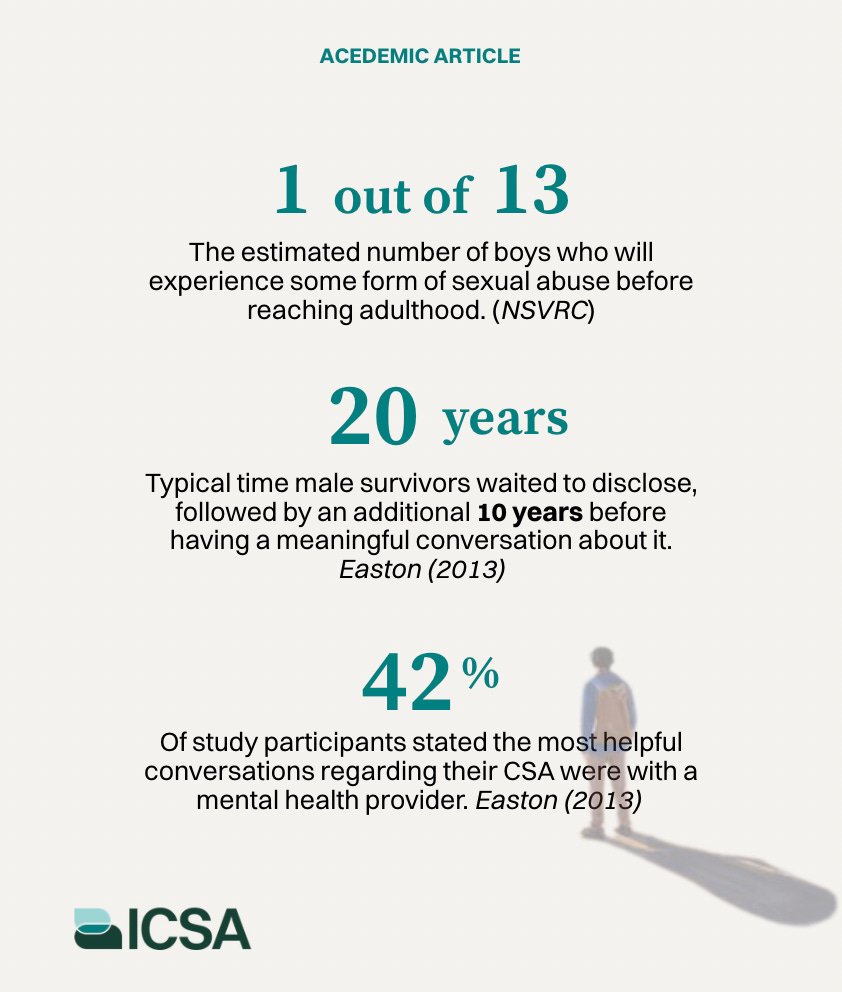
Adult male survivors face distinct obstacles that prevent them from seeking help, often waiting 20 years or more before their first disclosure. These barriers include societal stigmas regarding masculinity, erroneous beliefs that victims will become offenders, and fears related to sexual orientation. The research suggests that because children are the primary focus of most CSA studies, clinicians are often ill-equipped to handle the nuances of adult male disclosure.
“Little research has been done on adult experiences of disclosure... and in some cases, clinicians may inadvertently shut down adult male survivors’ disclosure.” (p. 55)
The “alone and not alone” paradox
Participants described a deep sense of isolation, feeling like an “anomaly and freak” because they initially found very little professional information about male victims. Meeting other men who had experienced similar horrors helped them overcome this feeling and finally disclose.
The “grenade” of sharing the truth
Participants in the study described the act of disclosure as “throwing a grenade,” reflecting their acute awareness of how their stories disrupt and “dirty” the lives of those around them. Many survivors are hyper-vigilant during disclosure, looking for cues to stop before they overwhelm the listener. This leads to a sense of isolation where the survivor feels like an “anomaly” or “freak” because they lack a safe space to share their burden.
“What are you gonna say to somebody after they throw that grenade in your lap?” (p. 58)
Confronting the monsters within
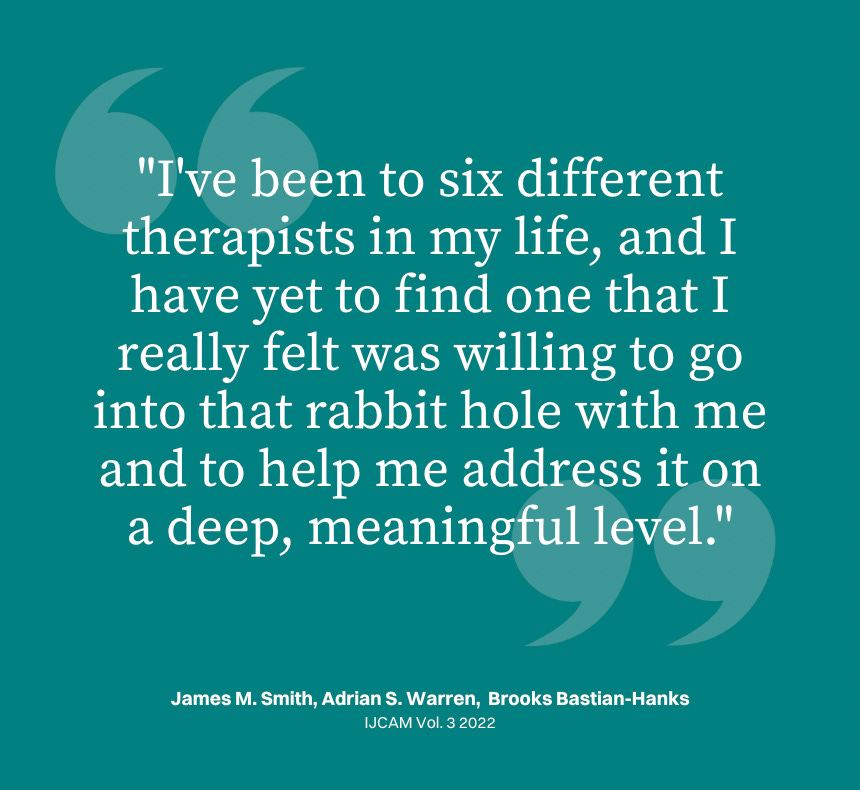
The abuse often takes on a life of its own, described by survivors as a "monster" or "entity" that lives deep inside and exerts control over their behavior. Before disclosure and healing, this internal "monster" often manifests as self-destructive patterns, including substance abuse and marital infidelity. Disclosure is seen as a terrifying but necessary attempt to invite a professional to "go into the rabbit hole" and confront these deep-seated effects.
"...if you can't talk about it, it has you in its grasp and it's this big secret. It's this nasty monster that you can't escape."
The risk of therapeutic disempowerment
A major finding was the "disempowerment" survivors feel when clinicians or family members take over the narrative after a disclosure. Whether it is a therapist forcing a confrontation with an abuser or shifting the focus to addiction against the client's wishes, these actions mimic the original abuse of power. True recovery requires the clinician to act as a partner, ensuring any course of action is taken only with the survivor’s explicit permission and autonomy.
"Abusers’ conditioning of their victims means that victims may acquiesce to a course of action that they do not want to pursue because they are conditioned to submit to the power of the other. A significant part of treatment lies in helping victims regain their own sense of self-agency."
Conclusion summary
The study concludes that disclosure is a relational reality, and male survivors require deep, affirming connections with clinicians who will not “shrink away” from their pain. To be effective, care must prioritize the survivor’s autonomy and use assessment tools—such as life timelines—that avoid stigmatizing language.
Why this is important
This area of research is critically underserved; while significant literature exists for child survivors, there is a “dearth of research” regarding the adult male disclosure process. The article’s focus on the “relational nature” of disclosure challenges the traditional view of the therapist as a passive receiver. It highlights how well-meaning clinicians can accidentally retraumatize survivors by exerting undue control, making it a vital read for anyone working in trauma recovery.
About the authors
James M. Smith is affiliated with the School of Counseling at Walden University. He is a survivor of childhood physical abuse and a cisgender, heterosexual man dedicated to supporting other men in telling their stories and seeking help.
Adrian S. Warren is affiliated with the School of Counseling at Walden University.
Brooks Bastian-Hanks is affiliated with the School of Counseling at Walden University.
I will be interviewing a adult male survivor of child sexual abuse at noon (PST) today. I appreciate these reminders to empower survivors and not highjack their story, their process or their truth.